
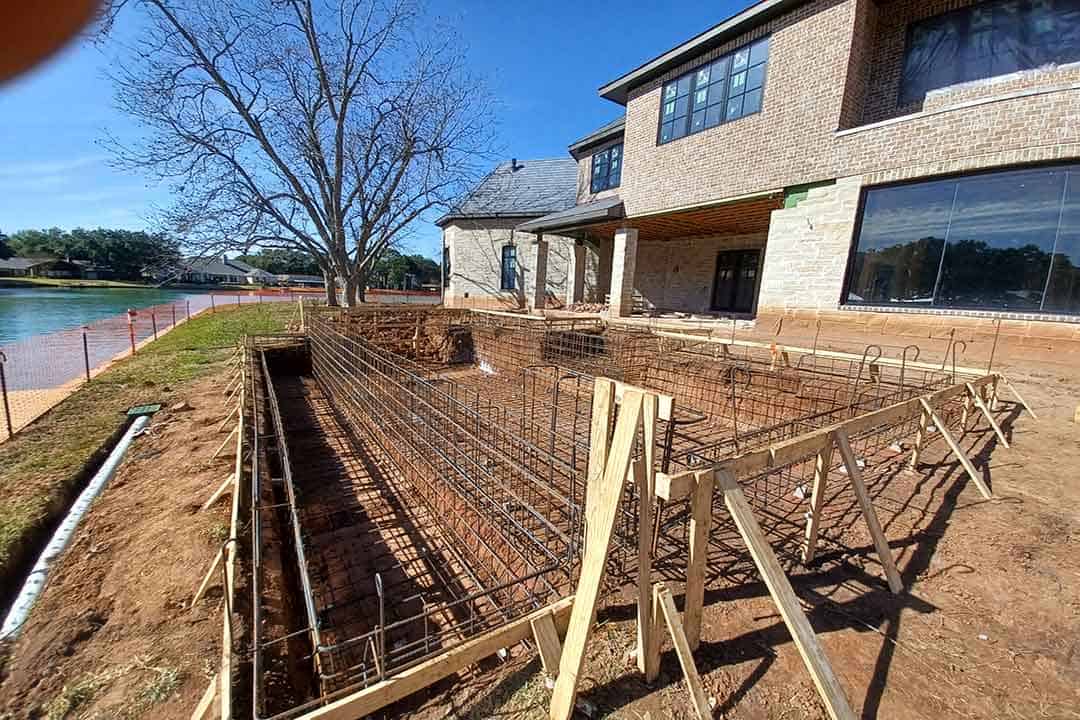
Houston soil conditions and custom pool design are closely connected. Many homeowners focus on finishes and features. However, the soil beneath your yard plays a critical role. Poor soil planning can shorten a pool’s lifespan and increase repair risks.
As a Houston pool builder, Downunda Pools approaches every project from the ground up. This guide explains how local soil affects pool construction and when additional engineering may be considered.
Houston soil conditions affect custom pool design because expansive clay moves with moisture changes. Clay expands when wet and shrinks when dry. This movement places stress on pool shells, decks, and plumbing.
Houston’s climate amplifies the problem. Long dry periods followed by heavy rain create repeated soil movement. As a result, pool construction must account for these conditions from the start.
Learn more about our approach to structural planning on our
👉 Houston custom pool construction process
Expansive clay soil dominates much of the Houston area. This soil reacts aggressively to moisture changes. Over time, movement can impact rigid structures like pools.
Common clay soil traits include:
High expansion potential
Poor drainage
Seasonal volume change
Increased pressure on foundations
Neighborhoods such as Bellaire and Sugar Land often experience higher clay activity. Pool design in these areas requires careful planning.
For a deeper explanation of Texas clay behavior, reference research from
👉 Texas A&M AgriLife Extension (authoritative soil science resource)
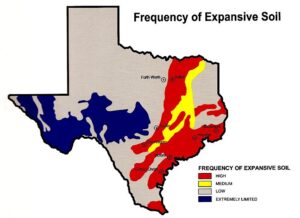
Frequency of expansive soil across Texas highlighting high-risk zones.
Seasonal ground movement affects pools by creating uneven pressure. During droughts, soil pulls away from structures. During heavy rains, it swells and pushes upward.
Potential risks include:
Shell cracking
Tile separation
Deck displacement
Plumbing stress
In areas like Katy and Spring, moisture swings are common. Pool designs must consider worst-case movement scenarios.
Soil reports support informed design decisions. These reports analyze soil type, bearing capacity, and moisture behavior. However, they are not included in most base pool bids.
A soil report may include:
Expansion potential
Load ratings
Excavation guidance
Engineering recommendations
When required, Downunda Pools coordinates with licensed engineers through our
👉 Houston pool design services
Pier systems support pools by transferring weight below active clay layers. These systems help reduce movement but add cost and complexity.
Common pier options include:
Drilled concrete piers
Steel friction piers
Helical piers for limited access
Homes in Humble may require this approach more often. While effective, pier systems significantly increase project cost.
Over-excavation removes unstable soil beneath the pool. Builders replace it with engineered fill and compact it to strict standards.
This process helps:
Limit soil movement
Improve load support
Stabilize the gunite shell
Proper preparation is essential to long-term performance.
Gunite is ideal for Houston conditions due to its strength and flexibility. However, it still depends on proper soil support.
A stable gunite pool foundation includes:
Reinforced steel placement
Engineered soil base
Correct shell thickness
Controlled curing
See real-world examples in our
👉 Houston pool portfolio
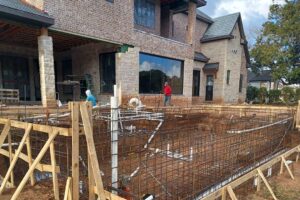
Steel Reinforcement: Essential for Concrete Pools
Soil conditions influence more than structure. They also affect layout and features.
Design considerations include:
Pool depth
Spa placement
Deck joint spacing
Drainage slopes
In The Woodlands, tree coverage often increases drainage planning needs.
Drainage controls soil moisture around the pool. Without it, structural movement increases.
Effective drainage may include:
French drains
Channel drains
Proper grading
Managed downspout flow
Houston rainfall makes drainage planning essential, not optional.
Pool builders and engineers serve different roles. Builders construct. Engineers evaluate structural risk.
Our workflow includes:
Site observation
Construction planning
Engineering coordination when required
Inspection and compliance
This approach supports responsible construction without unnecessary cost.
Engineering solutions often add significant cost to a pool project. For that reason, they are not standard in most bids. Many Houston pool builders rely on proven construction methods that perform well in typical conditions.
Important cost considerations include:
Soil testing is usually optional
Engineering is rarely included upfront
Pier systems increase cost quickly
Engineers are typically subcontracted
Builders must also limit liability exposure. As a result, definitive structural claims are avoided without third-party input.
At Downunda Pools, we explain potential risks, available options, and associated costs. When conditions warrant further evaluation, we recommend qualified specialists. The final decision always rests with the homeowner.
A pool should enhance daily life, not create long-term concerns. By respecting Houston soil conditions and offering informed options, we help homeowners build with confidence.
If you are planning a new pool, start with a conversation.
Contact Downunda Pools to discuss your site, goals, and budget.
Pools for the Mind, Body, and Soul. Built for Houston.